
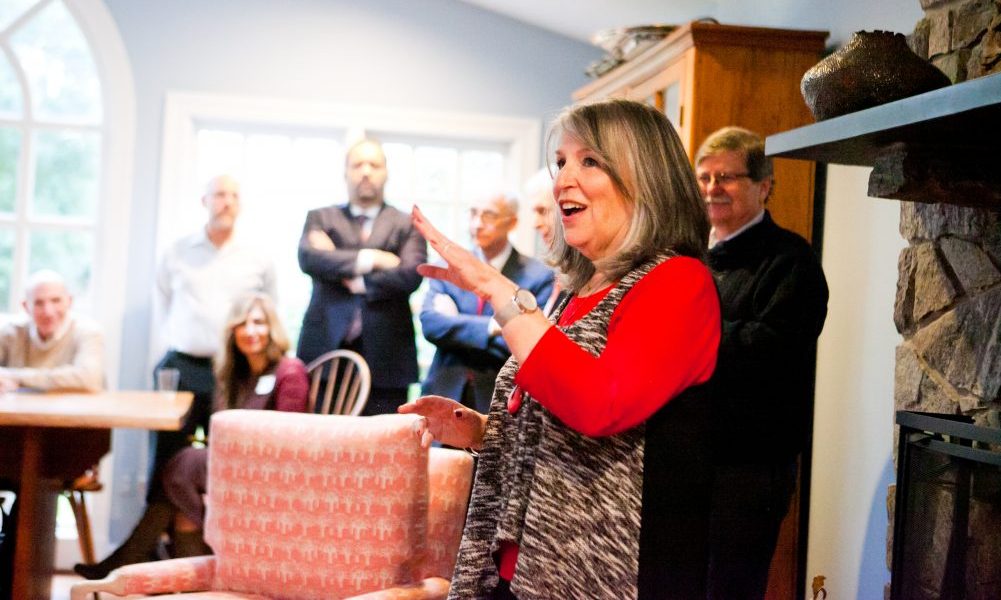
She was raised in a man’s world, never picturing herself in the spaces men occupied. “Girls didn’t get bat mitzvahs,” Jacky Rosen says. “My young self certainly couldn’t have imagined becoming a synagogue president.” But decades later—after leaving behind a computer programming career to care for her aging parents and in-laws—she took charge of Congregation Ner Tamid, the largest synagogue in Nevada. It was her first elected office.
For three years, Rosen managed a $2.5 million budget, helped lead fundraising efforts and spearheaded the building’s transition to solar energy. Most importantly, she learned how to listen with intent—to really listen. It was a demanding position, and her talents were noticed: In 2015, U.S. Senate minority leader Harry Reid personally reached out to Rosen to encourage her to run for the U.S. House of Representatives in Nevada’s 3rd, a swing district represented by a Republican. Although the Las Vegas Review-Journal described her as “a political unknown” with “zero political experience,” Rosen won the Democratic primary with 62 percent of the vote. In the general election, with a 1 percent margin, she won her second elected office.

Jacky Rosen is running for the U.S. Senate from Nevada.
Now, at age 60, Rosen is going for her third: a seat in the U.S. Senate. The stakes are high, as Democrats risk losing the House seat she is vacating. But if she wins, she could help Democrats take back the Senate, where they need to pick up three seats. Rosen’s opponent, Dean Heller, is considered vulnerable: He is the only Republican senator up for reelection from a state that voted for Hillary Clinton for president.
Rosen is one of more than 50 women, up from 25 at this point in 2016, who are expected to run for Senate this year, according to Rutgers’ Center for American Women and Politics. In the House of Representatives, more than 430 women are likely to toss their hats into the ring, up from 215. These are record-setting numbers, higher than any other year in U.S. history. Since the 2016 election, Emily’s List, which supports Democratic women running for office, has received inquiries from 34,000 women—up from around 900 in the previous election cycle.
Most of these women are Democrats, and many have stories like Rosen’s. First came the initial disappointment after Clinton’s loss to Donald Trump, and then the collective outrage fueled by the Women’s March in January 2017. Then came the #MeToo movement, elevating sexual assault prevention from the realm of tired office seminars to something that the powerful are forced to reckon with. Spurred on by these moments, thousands of women were inspired to seek elected office, says American University’s Pamela Nadell, who specializes in women’s history and American Jewish history. “We’re seeing a new cycle, a new wave—and it dates to the election.”
Although no official tally exists, many of these candidates are Jewish. Their backgrounds and ages vary, but a significant number, such as Rosen, received their political education in Jewish institutions. Working at the intersection of public service, public policy and public relations, they learned the skills vital for campaigns. “They have the knowledge, the credentials and the motivation to be policymakers,” says Ann Lewis, White House communications director under President Bill Clinton and a senior adviser during Hillary Clinton’s 2008 campaign. “We now have a generation of women who are ready and able to run.”
___________________________________________________________________________________________________________
In the early 20th century, American Jewish women—particularly those in large cities—were major players in the labor movement, joining groups like the International Ladies Garment Workers’ Union and marching in the streets to draw attention to tragedies such as the Triangle Shirtwaist Factory fire. They created tenants’ unions, organized rent strikes and lobbied to ease immigration restrictions. Many, including Gertrude Weil, Maud Nathan, Rosalie Whitney and Rose Schneiderman, were also prominent in the struggle for women’s suffrage.
Nevertheless, women were generally excluded from leadership positions in the Jewish world, says Nadell. Instead, they were segregated in sisterhoods or organizations such as the National Council of Jewish Women. This was the status quo until 1963, when Betty Friedan published her seminal book, The Feminine Mystique, which sparked second-wave feminism. In the book’s wake, “there was a real call to see the Jewish world transformed the way American society was being transformed,” says Nadell. “Because of the changes in Jewish communal life, women gained access to positions of leadership they never had before.”
In 1971, New Yorker Bella Abzug became the second Jewish woman to serve in the U.S. Congress—three decades after the first, Florence Prag Kahn. “This woman’s place is in the house—the House of Representatives,” was her campaign slogan. Abzug was a fiery Columbia University-trained lawyer, social activist and devoted Zionist. In her 1984 book, Gender Gap, she wrote, “Women now stand on the threshold of achieving more political power than they have ever had before.”
Abzug’s hopes were never realized. Progress for women lagged in American politics until 1992, when another transformative moment occurred: Anita Hill testified in front of an all-white, all-male Senate panel that she had been sexually harassed by Supreme Court nominee Clarence Thomas. Across the country, women watched on television as the panel treated Hill dismissively, showing “so much contempt for her experience,” says Lewis. That year, a record number of women ran for Congress. Four won Senate seats, including Dianne Feinstein and Barbara Boxer, both Jewish Democrats from California. Hopes were high that 1992, dubbed the Year of the Woman, would usher in a new era of political representation. But although the number of women in Congress rose, it did so only incrementally. “The surge subsides, but the gains remain,” says Lewis. “A surge, by definition, is not a constant.”
These changes trickled down to Jewish institutional leadership, but it was just that—a trickle. Although women make up about two-thirds of all Jewish communal professionals, according to a 2010 study by the Jewish Communal Service Association, they are paid much less—$28,000 less, on average—than their male counterparts. And of America’s largest Jewish nonprofits, only 11 are led by women, according to The Forward’s 2017 salary survey. When these top executives are ranked by salary, the highest-paid woman, Naomi Adler of Philadelphia—the only woman leading a Federation in a major city—comes in 29th.
___________________________________________________________________________________________________________
To see the glass ceiling in Jewish institutions, you need only look at the recent photo of nine grey-haired men tweeted by the Conference of Presidents of Major Jewish Organizations, celebrating its annual trip to Israel. Women do break through, but they are the exceptions. Two who achieved high lay leadership positions in recent years are Kathy Manning and Susan Turnbull. Manning was the first woman to chair the Jewish Federations of North America (JFNA), which oversees the powerful Federation fundraising engine across the country. Turnbull chaired the Jewish Council for Public Affairs (JCPA), which represents more than 125 local Jewish community relations councils and 16 national Jewish agencies. Both women are now seeking political office.
Manning, 60, is running for Congress in North Carolina’s 13th District. She is a former immigration lawyer and a high-profile civic volunteer in her hometown of Greensboro. Before chairing JFNA’s board, from 2009 to 2012, she had to achieve a series of lower-level firsts as she rose through the organization: She was its first woman treasurer, and then she was the first woman to chair its executive committee. “The Jewish world was good training for me,” Manning says, providing “real on-the-job training for how you can help people who’ve been through tough times get back on their feet.”
She began to consider becoming a candidate several years ago, after her daughter was diagnosed with a chronic illness. She needed a prescription filled, but the insurance company kept giving her the runaround. After two days of arguing over the phone, Manning was told she could pay full price and then apply for reimbursement. “When I asked him what this first month of the prescription would cost, there was this long pause,” she remembers, “and he said, ‘Well, $10,000.’”
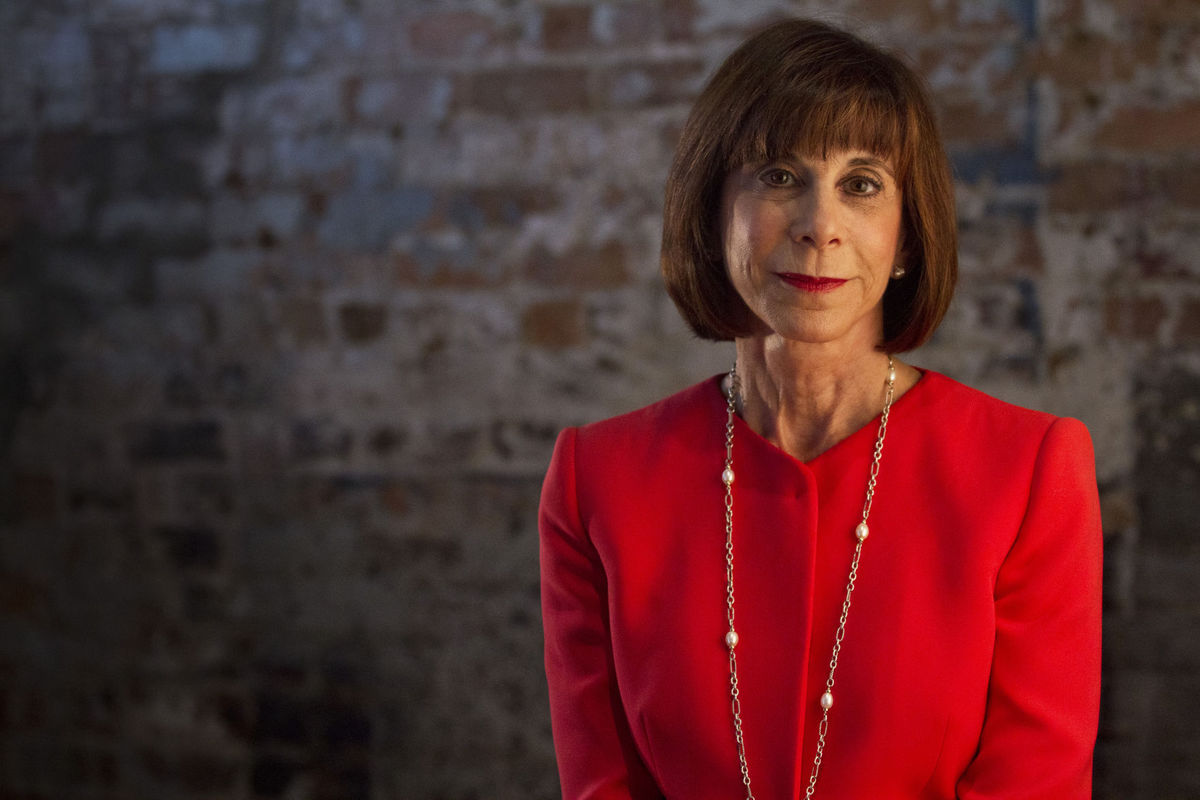
Kathy Manning is running for Congress in North Carolina’s 13th District.
Last year, watching Congress try to repeal the Affordable Care Act, Manning grew even more frustrated. “None of them ever bothered to dig into the important issue of how they can make health care more affordable and what we can do about the ridiculous cost of prescription drugs,” she says. “We need different people leading the way in Congress.” She decided then to enter the race, challenging freshman Republican Ted Budd. If she wins, she will be the first woman to serve in Congress from her district.
Like Manning, Susan Turnbull spent years in the Jewish world before putting herself forward for elected office. During her tenure as JCPA chair, from 2014 to 2016, she was often the only woman visible in photos of meetings between prominent Jewish leaders and administration officials, including President Barack Obama. Her political experience also stretches beyond the Jewish world: She is a former vice chair of the Democratic National Committee and former chair of Maryland’s Democratic Party. She is also a cofounder of Emerge Maryland, which trains local Democratic women. “We’ve worked over the last several years in particular to say to women, ‘No, you don’t have to wait until seven people ask you to run for office, and no, you shouldn’t put it off,’” she says.
Turnbull, citing competing responsibilities, put off running herself. But now, at 65, “I’m at a point in my life where that doesn’t exist anymore,” she says. “My children are now adults with children of their own.” She met Ben Jealous, the former NAACP president running for governor of Maryland, last fall. In November, Jealous announced Turnbull as his running mate. (Female governors are rare; there have been only 39, including two Jews: Democrat Madeleine Kunin in Vermont, and Republican Linda Lingle in Hawaii.)
Turnbull’s background is part of her political narrative. “My father was an immigrant,” she says, “and the notion of being able to exist and advocate and work to support other immigrants is really important to me.” Turnbull’s father arrived in the United States in 1925, and because he was just under 18, he was allowed entry despite strict quotas. But his two older sisters were left behind, and both died in World War II. Family reunification, she says, “described by President Donald Trump as ‘chain migration,’ is one that absolutely hits me to my core.” Jewish candidates, particularly Democrats, often prefer the language of civil rights and social justice to that of religion, says Lauren B. Strauss, who teaches modern Jewish history and literature at American University. “Jews seem to have a hesitation about being perceived as only advocating for their own, so they make a point of going out in favor of other groups.”
___________________________________________________________________________________________________________
For Elissa Slotkin, the tipping point was the House’s health care repeal vote. She remembers watching her congressman, Mike Bishop, on television, celebrating the outcome in the Rose Garden. Did he know what this would do to his district, she had wondered, and did he care? “My husband and I looked at each other and we just said, ‘You do not get to do this,’” she remembers. “So we decided to fire him.”
That’s when Slotkin, 41, decided to challenge Bishop in Michigan’s 8th District. Eight months later, the Democrat found herself at her first volunteer kickoff. It was an icy night, and her team warned her that turnout might be low—maybe 15 people. When 65 showed up, Slotkin asked how many had never participated in a political event before. Half the volunteers raised their hands.

Elissa Slotkin is running for Congress in Michigan’s 8th District.
Slotkin could relate. Although she had served as Obama’s acting assistant secretary of defense, she too had never worked for a campaign—or even donated to one. In fact, running for office had never been part of her plan. After 9/11, she was recruited by the CIA to be a Middle East analyst, and in between three tours in Iraq, she held a series of senior defense and national security positions. Nor did she take time out for extensive volunteer work in the Jewish community. Slotkin is part of a younger generation of Jewish women who have risen through the ranks of the government, the military or secular public service organizations.
This is also true of Elaine Luria, 42, who is running for Congress against Republican Scott Taylor in Virginia’s 2nd. The district stretches all the way from Maryland to North Carolina, “from very rural to urban to suburban,” she says. “The district itself is really a microcosm of the country.” She grew up in a Jewish family from Birmingham, Alabama, and then enrolled in the Naval Academy. She was one of 115 women of around 1,000 in her class. She graduated in 1997—17 years after the Academy’s first-ever class of 55 women. When she was deployed to Japan, she was one of four women on a ship of 300.
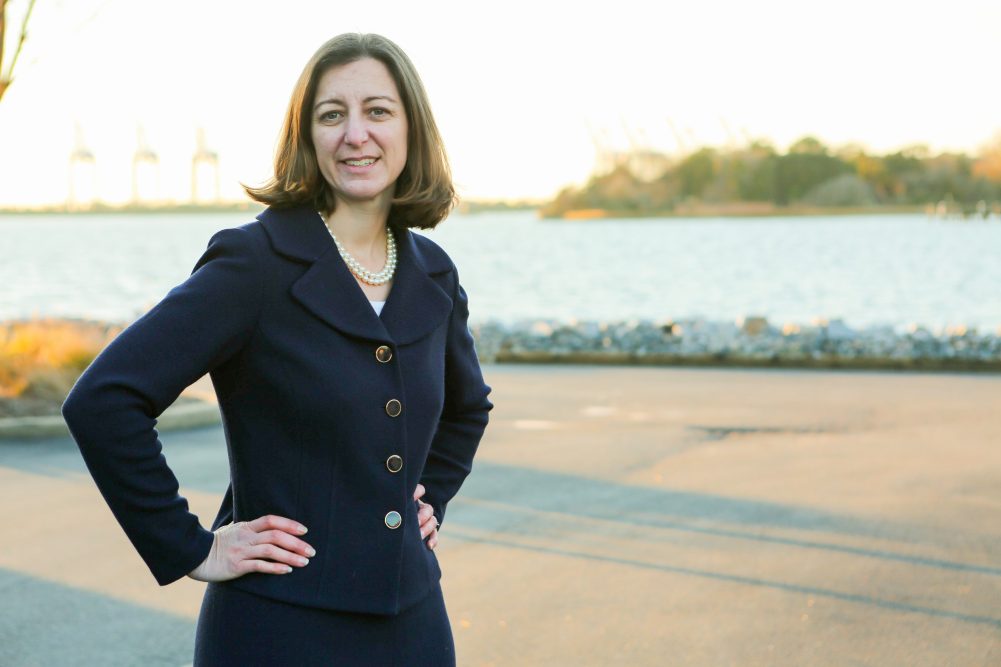
Elaine Luria is running for Congress in Virginia’s 2nd District.
Lena Epstein, 36, is the rare Republican Jewish woman entering a federal race. Initially she planned to challenge Democratic Michigan Senator Debbie Stabenow, but she changed her mind in September, after the Republican from Michigan’s 11th District announced he would not seek reelection. Epstein, a businesswoman, co-owns Vesco Oil, founded by her grandfather. Although she co-chaired Donald Trump’s 2016 Michigan campaign, she comes from a long line of Jewish Democrats. “My parents and I don’t see things the same [way] politically,” she says, “and yet I have their full support in this process.”
Her family came to America several generations ago, fleeing religious persecution in Europe. But Epstein’s position on immigration is strikingly different from her Democratic counterparts’. “We are a country of laws,” she says. “I support the path to legal immigration, and I do not support amnesty.” She frequently speaks about her support of Israel and opposition to the Iran deal, and she describes herself as a woman of deep faith.
Epstein is one of 95 Republican women (compared with 341 Democratic women) likely to vie for seats in the House, and she has been endorsed by VIEW PAC, a political action committee supporting Republican women running for Congress. “As one of the few Republican women running at the federal level in this cycle, I find it critically important to convey the message of what we represent,” she says. “Politics is not an old boys’ club, and the Republican Party is not an old boys’ club.”
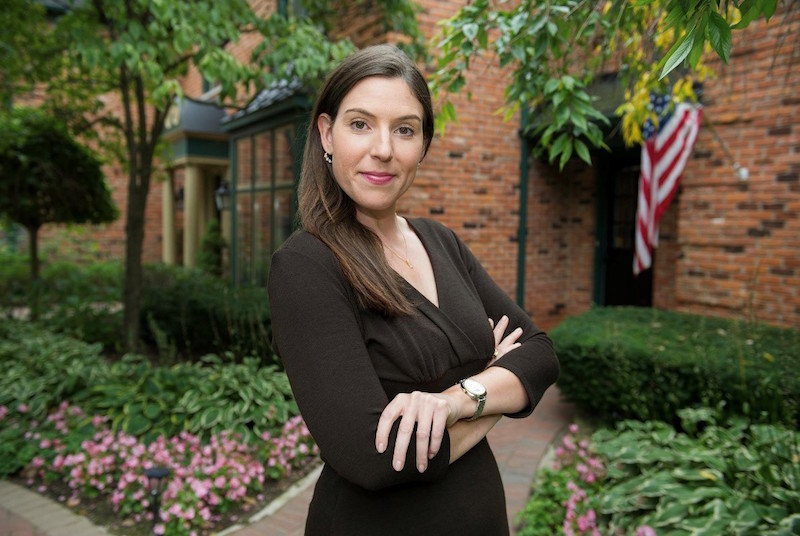
Lena Epstein is running for Congress in Michigan’s 11th District.
___________________________________________________________________________________________________________
Twenty-six years after the Year of the Woman, the hopes pinned on the women of 2018 may seem like an echo of the past. But the 2018 elections are undeniably different from 1992, says American University’s Nadell. “We’re seeing that moment once again, but now we’re seeing it with much greater numbers,” she says. “It’s massive.”
Thousands of women across the country are realizing that they are qualified to run—that women are judged by higher standards, and so they have overcompensated to meet them. Jacky Rosen noticed this phenomenon early in her career. “I felt like I could never walk into a meeting, never walk into a room if I didn’t know every single thing about what I was doing, because I felt I was going to get cross-examined,” she says. That’s why, says Emily’s List spokeswoman Julie McClain Downey, women are looking at their elected officials and realizing, “If this guy can do it, then I certainly am qualified to run for office.”
Luria, of Virginia’s 2nd, likes to quote the man she hopes to replace: “It’s up to me to see the clarity in chaos,” Scott Taylor once said. But Luria, who spent 20 years in the Navy, leading thousands of sailors, who deployed six times to the Middle East and Western Pacific, has a different approach. “My job as a leader was never to find clarity in chaos,” she says. “It was to prevent the chaos in the first place.”