
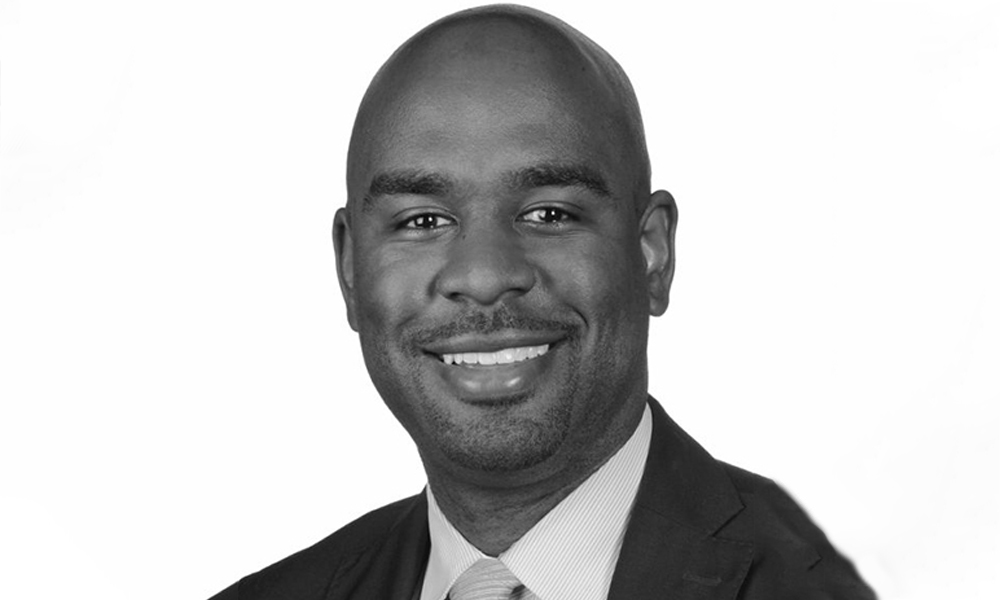
Since the attack on the U.S. Capitol, attention has turned to the multiple strains of violent extremism flourishing at home. Like jihadis, many such groups appear expert at getting people to radicalize, particularly online. Muhammad Fraser-Rahim is a well-known expert on Islamist radicalism, a former counterterrorism analyst for the U.S. government and a professor of security studies at Georgetown’s School of Foreign Service and at the Citadel in his native Charleston, South Carolina. As head of the U.S. office of Quilliam International, a U.K.-based group that works to rehabilitate violent Islamists, he now helps people caught in extremist groups all across the political spectrum. Fraser-Rahim talks to Moment about what radicalizing conspiracy theories have in common—and what can be done to defuse them.
What do we know about the pathway to radicalism?
Ideology isn’t everything. For all the “formers” we work with, whether they’ve been involved with Islamism, anti-Semitism, domestic or racism-based extremism, you can strip out the ideology and see a young person looking for a sense of belonging. They might be white, Black, Muslim, Buddhist, anything. We’ve interacted with many individuals who’ve been white supremacists and who’ve left that path, and they say they were looking for meaning, purpose, some kind of group identity. They encountered an influencer, someone who gave their life psychosocial meaning, and then, ultimately, were mobilized for the cause.

The challenges of working with domestic extremists are the same as of getting young people out of gangs and tackling Islamism. You have to figure out what’s going on. For a mother or father whose child is hearing a new ideology and a new message, it’s always confusing. Sometimes it can be absolutely okay; maybe the child is just looking for something new. But there are fundamentalists of all faiths who use spiritual pathways for nefarious purposes.
Is it easier to self-radicalize online?
Usually when someone radicalizes there’s an interlocutor, someone to interact with, but now people are self-starters, self-radicalizers. They can find the ideology on their own. Still, there’s always an online community or a network that people engage with, a point of reference.
Can you use the same techniques against QAnon, ISIS and neo-Nazis?
Yes. We don’t have to reinvent the wheel. The government’s always been concerned with domestic extremism issues, but the priority was mostly Al Qaeda and ISIS, so there wasn’t much funding. Now there’s political will to do something about it.
So what are the techniques? What works?
First, deradicalization doesn’t work with everyone. You need a willing participant. We can talk until their ears fall off, but unless they’re ready to listen, that’s all it’ll be. You have to work very quietly, discreetly. Families dealing with this are often embarrassed. It’s slow work. I try to create new structures around a person, so they feel the possibility of a different community. One individual I dealt with about five years ago wanted to become a member of ISIS. His grandmother was Jewish and his mother was mixed race, and he was alienated from them. Early on, I invited him to come to the America’s Islamic Heritage museum in Washington, DC. I wanted to show him how, in normative Islam, family bonds are important—the Prophet says three times that you should honor your mother. And in the museum, this young man said something disrespectful about his Jewish grandmother.
He was super-excited about this new faith he’d found, this very conservative interpretation of Islam, and he said something negative about the Jewish community. And one of the museum people, who didn’t know anything about why he was there with me, actually lunged at him, saying, “How dare you disrespect your grandmother? I don’t have a grandmother!” That really made an impression on him. So you never know exactly what will work.
Can we do more as a society?
Deradicalization has to come along with counter-messaging, persuasive public speech, good families, mentors and clinical assistance. We need to find the right balance. The First Amendment allows viewpoints even if they are totally repugnant. But cancel culture isn’t going to work either. As a nation, we haven’t had to decide what are acceptable norms and what we are comfortable with in a changing world. We haven’t held our politicians and influencers accountable to that norm. We have to be willing to approach, say, an evangelical pastor in Tennessee if we have evidence some of his churchgoers are becoming radicalized, and challenge him to use his pulpit to articulate something other than “It’s all the fault of the Democrats.”
Opening picture: Muhammad Fraser-Rahim