
1. What memories of an Obama aide can teach us on Biden’s Israel policy
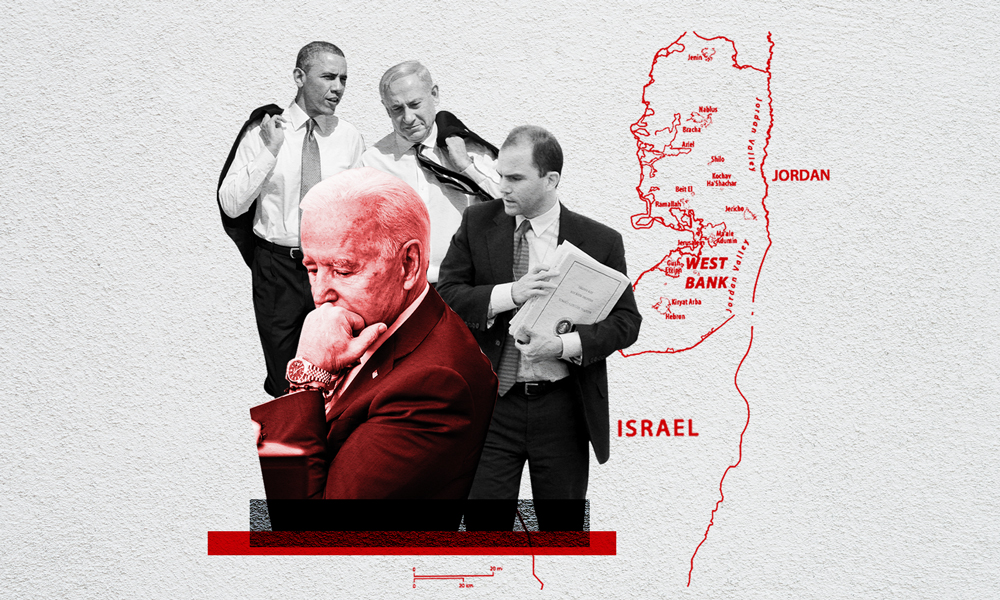
Ben Rhodes worked under Barack Obama from the early days of Obama’s first presidential campaign. During Obama’s years in the White House, Rhodes served as deputy national security adviser; he oversaw much of the traffic relating to Obama’s relations with Israel, the Middle East and the Jewish community.
Rhodes has a book coming out, and he recently sat down for an interview with Peter Beinart on the Foundation for Middle East Peace’s podcast, Occupied Thoughts.
It’s well worth the 44-minute listen if only to get Rhodes and Beinart’s well-articulated description of where progressives currently stand on issues relating to Israel.
But there’s also much to learn from Rhodes (who, contrary to many other Obama-era advisers, did not find himself in the Biden administration) about the outlines that will define the new president’s approach to the Middle East.
One key takeaway is that regardless of any concerns (whether real or made up for political reasons) Israelis and pro-Israel Americans might have about Biden, the existing policymaking architecture on anything that has to do with Israel will deter the president and his team from veering from a defined centrist line.
In other words, it’s not about Biden’s feelings toward Netanyahu (did he have to wait four weeks before picking up the phone to call Bibi?), nor is it about any misgivings people on his team may have toward the Israeli leader because of the way he treated Obama. The future of the relationship will be determined by factors that were in place before Biden entered the Oval Office and will remain after he leaves: a pro-Israel press (Rhodes refers to it as “pro-Likud media”); Jewish officials with an intuitive pro-Israel understanding of the situation both in the administration and Congress; and a well-organized, well-connected, well-informed pro-Israel lobby.
Rhodes goes to great lengths to make sure his observations don’t come across as “conspiratorial”—and they don’t. But they do illustrate how any American administration, especially a Democratic one, works within an ecosystem that leans toward the pro-Israel side. “I remember looking around the room in the situation room at a meeting on an Israel-Palestine issue, and every single one of us in the meeting was Jewish,” Rhodes recalled. “We understand the Israeli fears and grievances and concerns intuitively as Jewish Americans.” He also noted the level of engagement and specificity of pro-Israel advocates who came to meet with him at the White House during the debate over the nuclear deal with Iran, some of whom Rhodes described as “armchair nuclear scientists.”
Much of this may come across as ranting from a former Democratic administration official recovering from a tough 8-year stretch of having to deal with a community that disagreed with many of his boss’s policies. But if applied to the future, Rhodes’s observations make clear that just as Obama worked within the overall pro-Israel framework of American politics, so will Biden. The same infrastructure of pro-Israel forces and sentiments is still in place.
2. The Democrats’ waning leverage
The second takeaway from Rhode’s description of his life in the frontlines of Democratic Middle East policy is that partisan politics has given right-wing Israelis the upper hand in any issue relating to Israel. Rhodes describes Democrats as being in a “defensive crouch,” having to explain and apologize for members of their party on the left who may be critical of Israel.
He argued that the Israeli agenda is set by the right-wing—a group that opposes, either openly or tacitly, the two-state solution. These right-wing actors, who represent the majority of Israelis and who usually set the tone in the Israeli government, know that American politics on Israel is playing in their favor: They will always have the entire Republican Party to back them (thanks in large part to evangelical Christian voters) along with conservative Democrats more likely to side with the Israeli government on key issues (see, for example, the Iran nuclear deal.)
Bottom line: Once Israel became a partisan issue, Democrats lost much of their leverage and find it increasingly challenging to pressure Israel into any concessions since Israelis can shop around for better offers from the other side.

3. Israel 2024
As Republicans try to figure out where their party stands and what shape it will take as it moves on, one thing is clear: Being pro-Israel remains a great line for any Republican espousing any political aspirations.
Former Secretary of State Mike Pompeo, who is rumored as a possible 2024 contender and among the Republicans sticking with Trump, saw Rhodes’s comments as an excellent opportunity to brandish his pro-Israel credentials.
Pompeo tweeted that Ben Rhodes had said, “Netanyahu and all Jews—are ‘corrupt and cruel.’ While this view is taking root among some Democrats, does President Biden agree? I hope not.”
Ben Rhodes told @J_Insider that @netanyahu — and all Jews — are “corrupt and cruel.” While this view is taking root among some Democrats, does President Biden agree? I hope not.https://t.co/43aFOqgeC2
— Mike Pompeo (@mikepompeo) February 18, 2021
This tweet is a wild misinterpretation of Rhodes’s comment, who tried to explain Netanyahu’s thought process and, taken in context, did not accuse him of being “corrupt and cruel.”
Nikki Haley, the former UN ambassador who has recently turned on Trump and may very likely meet Pompeo as a rival in the 2024 GOP primary, is taking issue with Joe Biden’s policies on Israel. She came out against the new administration’s decision to restore U.S. funding to the UN Relief and Works Agency (UNRWA) serving the Palestinians. “Biden should be condemning UNRWA for inciting violence. Not reinstating funding and sending $380 million a year to an entity that promotes terrorism,” Haley tweeted.
Don’t be fooled by the UN Relief and Works Agency’s (UNRWA) misleading name. The UN entity’s official mission is to provide relief to Palestinian “refugees.”
In reality, it indoctrinates Palestinian children with anti-Israel propaganda and praises terrorism.
— Nikki Haley (@NikkiHaley) February 19, 2021
4. Bibi’s rush to eulogize Rush
Last week, many American conservatives mourned the death of Rush Limbaugh, the radio pundit whose voice narrated the rise of conservative America.
Back in Jerusalem, Prime Minister Netanyahu joined the mourners with a statement sending his “heartfelt condolences” to Limbaugh’s family and praising him as a “great friend of Israel” who “stood by us through thick and thin.”
As expected, Bibi’s decision to issue a statement came under fire.
Why not express this very human sentiment? Here’s a summary of the arguments:
Critics argue that Limbaugh’s offensive rhetoric, specifically toward minorities and women, as well as his divisive tone, should not be embraced by the Israeli leader. Some had mentioned accusations of insensitive comments using anti-Semitic language in the past as further reason.
But there’s another side to this debate: Supporters of Netanyahu’s decision note that, just as he said in his statement, Limbaugh was indeed a vocal supporter of Israel, and that using his powerful megaphone to voice these views helped instill pro-Israel beliefs within the conservative camp.
Beyond the dueling approaches to the issue, there’s one argument that can’t be disputed: This probably won’t do much toward smoothing relations with the incoming Biden administration
5. After the call, what next?
The overblown drama over the timing of Biden’s call to Netanyahu is now over. On February 17, Biden finally made the call, and—according to official readouts provided by both sides—it went well.
Now that this manufactured obstacle is out of the way, what’s next on the two leaders’ agenda?
First, Iran. Biden is already moving closer to rejoining the Iran nuclear deal, and Netanyahu is already drawing red lines, so expect this issue to dominate the relationship in months to come.
Then comes the Palestinian issue. Biden announced steps aimed at revoking Trump’s anti-Palestinian approach. Netanyahu may not like these moves, but he’s unlikely to object. Either way, there’s no major peace initiative in the works, so expect no more than minor friction on this issue.
And then there are the upcoming elections in Israel. Assuming Bibi pulls off another win and assuming he forms a right-wing coalition, this is where things could get interesting. Will the Biden administration speak out against including the party of Kahane-sympathizers in Bibi’s coalition? Will the U.S. try to block post-election settlement expansion?
The Biden team has a couple more months before having to deal with these questions.